
Forget About Your IPO, Schedule Your IOP
If you work in tech, you probably know what an IPO is. You may even spend an unreasonable amount of your life thinking about one: the startup, the equity, the valuation, the mythical liquidity event where everybody finally discovers whether those stock options were worth anything. But there is another acronym I think a lot more tech workers should know about: IOP. Intensive Outpatient Program.
I realize that is not nearly as exciting as Initial Public Offering. In fact, "Intensive Outpatient Program" might be one of the least inviting names anyone has ever come up with. Before I went to one, I pictured something halfway between a hospital and disappearing from civilization. I assumed I would have to take medical leave, stop working, hand over my normal life for a month, and reemerge later.
I work in tech, from home, and for a long time working from home seemed like one of the greatest inventions ever. No commute. No cubicle. No pointless drive across Los Angeles just to sit in front of the same computer I have at home. But remote work has a strange bug: you can spend eight hours a day talking to people on Slack, Zoom, GitHub, email and whatever project-management system your company currently believes will finally solve project management, and somehow still barely interact with another human being.
Eventually things were not going very well upstairs. The service was technically still running, but there were a few production incidents. I ended up at an IOP here in Los Angeles. There was Wi-Fi, there were desks and couches, and people carried laptops around. I went to group, took a break to answer Slack messages, then went back for another group. I could get some work done between sessions.
It felt like somebody had accidentally combined group therapy with a coworking space.
I had thought my options were to keep working as usual or step away from my life for treatment. My IOP was somewhere in between. IOP is outpatient care: you go home at the end of the day. Programs often meet for a few hours on several days each week. Los Angeles Outpatient Center describes its adult IOP as three hours a day, three to five days a week.
And tech workers, come on. Half of us have access to the mythical creature known as "unlimited vacation." The company says, "Take as much time as you need," and somehow everyone takes less vacation. If you have unlimited PTO and you're running on fumes, try using some of it. Take time off or rearrange your hours. You may not need to choose between working as usual and vanishing for three months.
One reason I'm building Groupicorn is that learning what an IOP is doesn't tell you what a particular program is like. A treatment center website might promise "individualized evidence-based holistic care." That still doesn't answer what I wanted to know: How many hours would I be there? Morning or evening? Could I keep working? What does the building look like? Who would I be spending twenty hours a week with?
I've started collecting those details in Groupicorn. Each record gets a score out of 100 across four areas: evidence (up to 30 points), program detail (25), clinical fit (25) and practical detail (20). The score is not a rating of the treatment center. A 94 doesn't mean a place is "94 percent good," or that someone should choose it over a place with an 87. The score tells you how much useful, supported information we found about the program.
Key Healthcare's Los Angeles Adolescent Outpatient record has the highest score in this set: 96, with full points for evidence and strong program and clinical details. That number won't help a 38-year-old software engineer looking for adult care. Coastwise Health in San Pedro scores 95. HillsidesCares in Pasadena , Launch Centers in Los Angeles and Los Angeles Outpatient Center in Culver City each score 94. The scores tell me how much we were able to document, not which program is right for you.
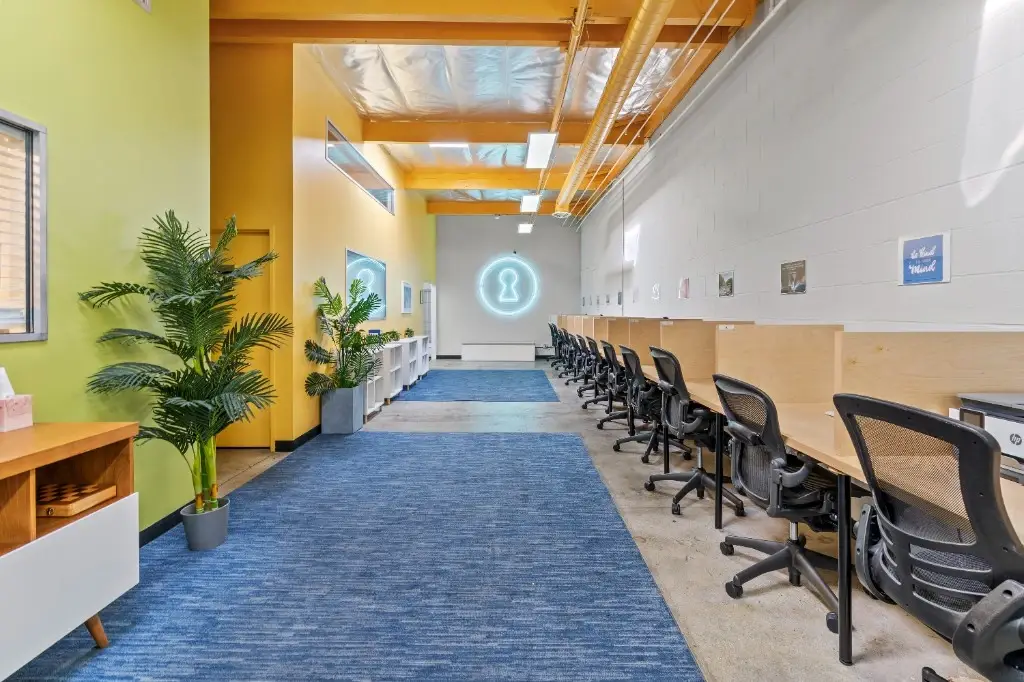
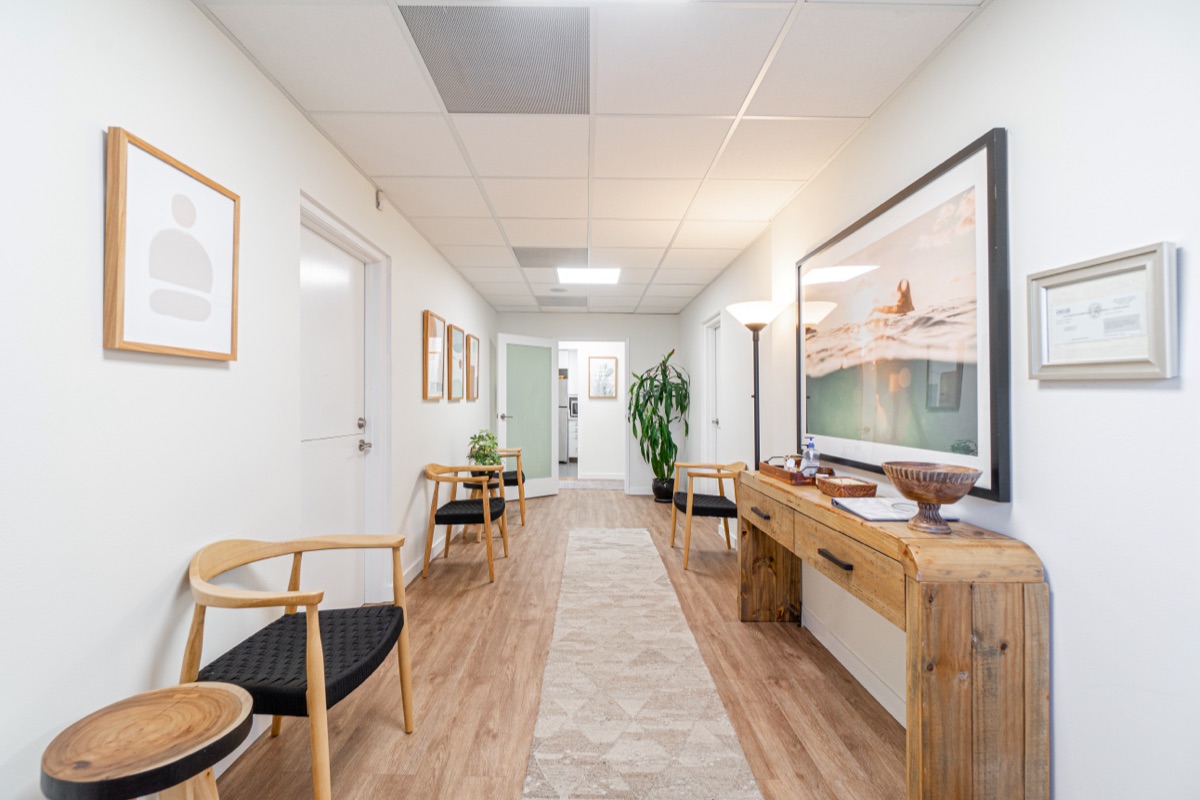
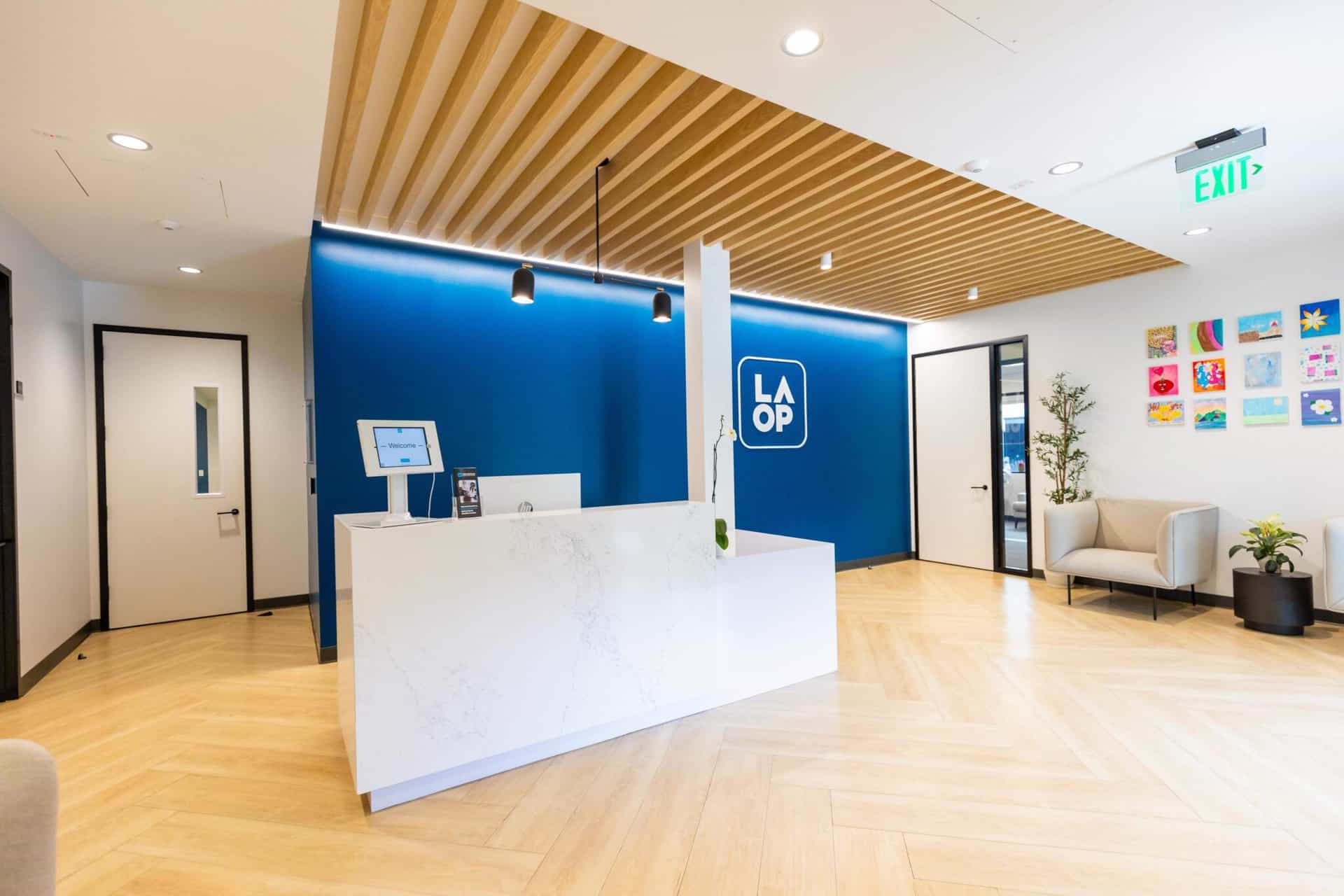
If you work on the Westside, Los Angeles Outpatient Center in Culver City is a useful example. Its 94 breaks down to 30 points for evidence, 19 for program detail, 25 for clinical fit and 20 for practical detail. The adult IOP is listed as three hours a day, three to five days a week, with morning and afternoon options. The record also describes the building: parking, therapy rooms, common spaces and an outdoor area.
The LAOP listing names Executive Director Dominique Hamler, MSN, RN, psychiatrist Dr. Daniel Duel, primary therapists Morris Clardie and Devon Medina, nurse practitioner Debra Bennett, art therapist David Morin, music therapist Jorge Villanueva and trauma-informed yoga therapist Crissy Luna. When I first looked for an IOP, I didn't know to look up the people who worked there. Seeing their names, along with photos of the building, makes the place easier to picture.


Mission Harbor Behavioral Health in Los Angeles scores 91: 30 points for evidence, 19 for program detail, 25 for clinical fit and 17 for practical detail. Its adult IOP runs three hours a day, three to five days a week. The provider says scheduling is flexible between 9:00 a.m. and 8:30 p.m. I'd still call admissions to ask which sessions are available. "Flexible" can mean different things.

CAST Treatment Centers in West Hollywood scores 87. It has 12 of 25 points for program detail, 25 for clinical fit and 20 for practical detail. Its LUNA program is an online evening IOP for California adults, with groups Tuesday through Thursday from 5:30 to 8:30 p.m. and one individual session each week. You could close Slack at the end of the workday and join from home.
The CAST listing names Executive Director Samson Motavassel, LCSW; Clinical Manager Sarah Leitz, LMFT; Program Manager Jackie O'Brien, LMFT; Medical Director Dr. William D. Stanley; and other staff. When I first started looking into IOP, I pictured an institution. Seeing the building and the people who work there would have helped me understand what I was walking into.


There are other Westside options in the data. Muse Treatment's Westwood location scores 88 and lists morning, midday and evening sessions, for about nine to fifteen hours a week. Thrive Treatment in Santa Monica scores 85. Its IOP meets at least three days a week for about three hours a day, and the provider also offers morning, afternoon and virtual options. Muse's record emphasizes substance use and co-occurring conditions. Thrive's also has a strong substance use focus. I'd want to know that before choosing a place from a search result for "IOP near me."


The schedule mattered, but I hadn't expected group therapy to be what stayed with me.
I'd done plenty of one-on-one therapy before, and group therapy felt almost 180 degrees different. One-on-one therapy can sometimes put you in the role of The Person With The Problem. You're sitting on one side of the room describing everything that has gone wrong, and there's one other human being on the other side trying to help you make sense of it. Therapists and doctors can be incredibly helpful. They've spent years learning things I haven't. They're human, too.
In a group, you aren't relying on one person to have every useful thought. There might be fifteen people in the room. Somebody half your age says something and you think, "Oh no, they're completely right." Somebody else describes a problem that seems nothing like yours, then says something that sounds exactly like what you've been feeling for ten years. It can be easier to recognize one of your own habits when you see somebody else doing it.
Sometimes the clinician says the thing you remember. Sometimes it's the guy next to you eating a granola bar. I liked looking around the room and realizing nobody had received an instruction manual. We were all comparing notes.
That's where Groupicorn came from. I wasn't working on a big startup vision or a pitch deck. One day I was sitting between groups with my laptop open, thinking about the people I'd gotten to know. We'd spent hours talking about personal things, then group would end and it was, "Okay, bye everyone."
If we wanted to stay in touch, we had to exchange phone numbers, start a group text or move to some messaging app. I remember thinking: why isn't there an app for the group? A place to talk without giving fifteen people your personal phone number, and to keep the group going after everyone walked out the door.
Group plus unicorn became Groupicorn. The name is silly on purpose. This world already has enough intimidating terminology: Intensive Outpatient Program, Partial Hospitalization Program, behavioral this, clinical that. Every acronym sounds like something you don't want appearing on your calendar.
The IOP I went to was ordinary: people talking, listening, eating snacks, taking breaks, checking their laptops and trying to understand themselves a little better. IOP isn't for everyone. Programs differ in who they treat, how they're structured, what insurance they take and how flexible the schedule is. I wish I'd known what an IOP looked like years earlier.